News

Our new address and a sundial in the garden

New address and sundial in the garden

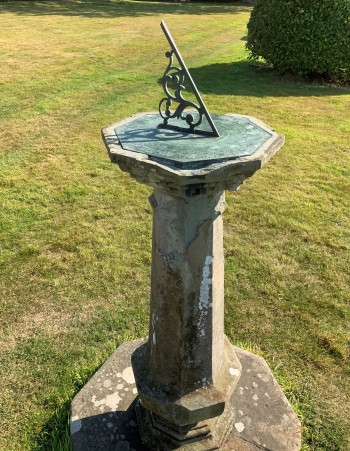
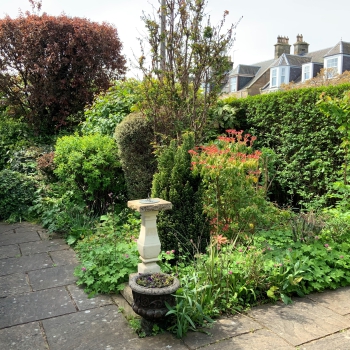
A sundial already standing in the garden at our new address for Macmillan Hunter Sundials

Macmillan Hunter Sundials has been in business for twelve years. Until March this year we were at 3 Peel Terrace in Edinburgh, and now we have moved. Our new address is only a mile away at 37 Alnwickhill Road. This property has excellent accommodation and ample working space. When we first came, we did not expect to find a sundial already standing in the garden, and this was a pleasant surprise. On inspection it even proves to have been installed on the correct north-south line to read the time.

Share:

A first sight of the sundial at Lews Castle

A first sight of the Lews Castle sundial

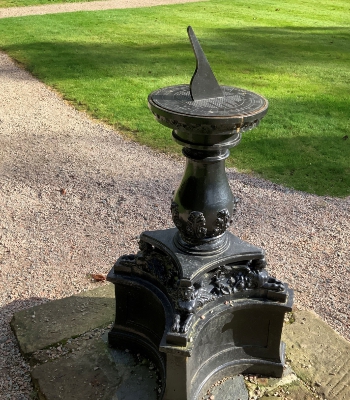
A first sight of the Lews Castle sundial at Stornoway, Isle of Lewis. This was a restoration we completed in 2020.

The sundial at Lews Castle, which overlooks Stornoway harbour on the Isle of Lewis, Scotland, is a restoration of a piece of nineteenth century garden furniture. The cast iron pedestal was once the base of a water fountain that stood in the castle grounds. In 2019 work started on a major Castle Grounds Regeneration Project, which included the pedestal. This ornate piece would be restored as a sundial. The Stornoway Trust had a special wish to see a timeline history of the Lews estate written on the dial. Continue reading

Share:

The Sandford Fleming sundial memorial nears completion

The Sandford Fleming sundial memorial nears completion

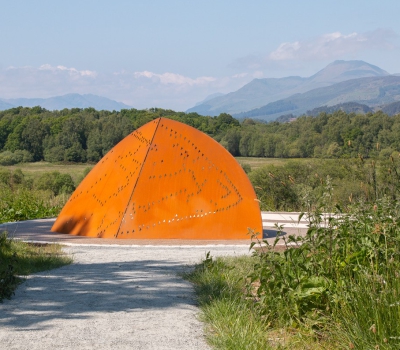
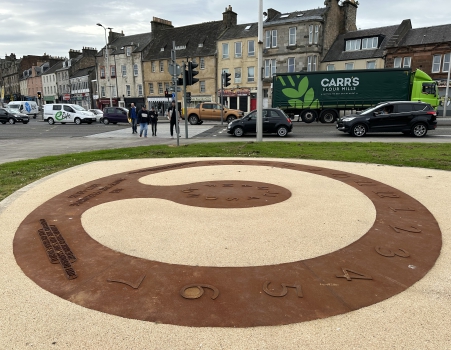
The Sandford Fleming sundial memorial nears completion now the paving is laid. The memorial is on Kirkcaldy waterfront at the end of the High Street.

The Sandford Fleming sundial memorial nears its final phase of completion. The bonded resin paving surface has now been laid. Its creamy colour sets off the brown Corten weathering steel of the sundial extremely well, and it frames the oval shape, which represents Sandford Fleming’s main idea of a system of time that embraces the whole of the world. The sundial is furnished with brief text panels for explanation, and a new information board is on its way.

Share:

Sundial memorial to Sir Sandford Fleming in Kirkcaldy

Sundial memorial to Sir Sandford Fleming

This is the analemmatic type of sundial that lies flat on the ground and the person casts the shadow to show the time.

The coastal trading and industrial town of Kirkcaldy in Fife, Scotland, was famous up to the 1960s for its linoleum. In an earlier age, Adam Smith the 18th century economist and author of The Wealth of Nations was born in the town. Sandford Fleming was born in Kirkcaldy on 7 January 1827. He pioneered the changes to standard time and time zones for the whole world. Continue reading

Share:

A sundial commission unwrapped for an 80th birthday celebration

A sundial commission for an 80th birthday celebration

The design is a polar sundial, which tilts up at the latitude angle. The happy owner has unwrapped his 80th birthday present from the family.

“My father turns 80 this year and we are looking to commission a sundial in celebration. Is this possible? What’s the process? How long does it take?” When this email appeared in our inbox one day in March of course we wanted to follow it up. It sounded such a lovely suggestion from the family. Later when we learned a little more it looked like a perfect plan. Continue reading

Share:

Armillary sundial reads summer solstice by the shadow of a ball at noon

At the summer solstice the armillary sundial casts a shadow of the ball at noon

At summer solstice the ball on the upper tropic ring casts its shadow exactly onto the opposite ring below. The upper tropical ring is the tropic of Cancer and lower ring is Capricorn.

The armillary sphere dates back to ancient times when astronomers created their own vision of the earth and the heavens. The idea still works today and our own design creates a sundial with a special feature of two balls that mark the passage of the seasons by their shadows. One of the balls reads summer solstice. This is the high point of the year when the sun is highest in the sky. Continue reading

Share:

Sundial restoration at Butterton church turns up a mystery engraving

Brass sundial plate turned over and showing engraved writing on the back

The engraving looks like Gothic script but we didn’t know how to read it. We do hope to learn more about this extraordinary discovery on the back of a brass sundial. So far it has proved a mystery.

The Church of St Bartholomew in the lovely Staffordshire village of Butterton in the Peak District stands on high ground. Its tall spire is visible for miles around. Just near the church’s south porch there is a sundial. The sundial pedestal may once have been part of a medieval stone cross, and the dial made of brass Continue reading

Share:

Restoration of a small brass garden sundial from the 1930s

Brass sundial from the 1930s restored with a new gnomonThis small brass garden sundial had lost its gnomon. It is dearly loved by its owner who has known it since childhood, and she wanted to have it restored. As often happens at different times the family moved home and the sundial moved too. Continue reading

Share:

The last of our songbird sundials flies to Paris

Orbdial sundial design with songbird gnomon

This design is a form of universal sundial. It is adjustable and we build it for its intended latitude.

The last of our songbird sundials has flown away. It now has a new home in a new country, in Paris. This special design appeals to the eye and has intriguing gnomonic features. The new owner already knew that the Orbdial was the one they wanted. Continue reading

Share:

Armillary sundial shadow one month on from winter solstice

Armillary sundial shadow one month on from winter solstice

The shadow of the ball on the sundial follows the sun all year round. The sun is low in the sky in winter, and it reaches its lowest point at the Winter Solstice on 21st December. This photo is one month later on 20th January. The sun is already higher in the sky, and the ball’s shadow has moved down.

Sundials catch a shadow from the sun. It is such a simple idea. The shadow on the sundial shows the sun’s position in the sky and the sundial reads it out as time, usually the time of day and often the time of year as well. Our armillary sundial is a special one with two balls that give the time of the year measured by the height of their shadow at noon. One ball casts a shadow in the winter months and the other one in summer. Continue reading

Share: