
 The flowers of spring are at last basking in sunshine, even confounding the forecast of rain for the opening of Caol Ruadh Sculpture Park’s 2014 Connections Exhibition, which runs from Sunday 11 May until 14 September, Continue reading
Sculpture
Sculpture Exhibition
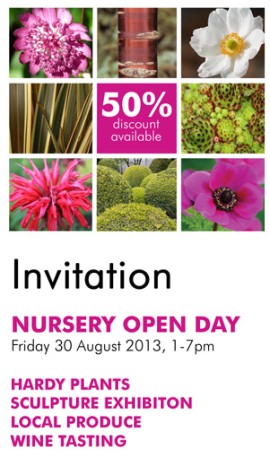
nursery open day
Damhead Nursery opens its gates once again to welcome gardeners, designers, landscapers, plant lovers and everyone who likes beauty in a garden. The sculpture exhibition brought together exclusively for the end of August will show off remarakable work by accomplished local artists in metals and other materials.
The sundial display that is proving such a success at Damhead earns a deserving place in the whole exhibition. “We are enjoying the very positive feedback we get from our visitors about your stand!” says Sue Gray, while she plans the arrangements. There is wine tasting on the Friday afternoon, and the gates are open for the weekend. Open Friday to Sunday, 30 August to 1 September.
Art is about the artist, says Director
Simon Groom talked about art last night. He commissions artists. Well, it’s his job, he is the Director of Modern and Contemporary Art at the National Galleries of Scotland. But what a talk, and what a privilege to join the Architectural Heritage Society of Scotland who invited him, and what a place to meet in—the Glasite Meeting House, of all places, the 1836 chapel in the New Town of Edinburgh used by the followers of one John Glas a radical Scottish Christian minister from Auchtermuchty in Fife! (You must see this chapel just once, box pews and no slouching, ramrod straight upright backs are the only way of sitting—unless you try lounging in a corner and even that is hard!)
So, the talk, it was about sculpture, especially recent works commissioned at Jupiter Artland, Scotland’s art park at Bonnington House in West Lothian. Simon’s view is very robust: you choose your artist, you discuss and perhaps outline the work you wish to see, and you let the art come. Who knows where it will lead? Andy Goldsworthy’s “Stone House” is a good example—when Andy started digging to make foundations he immediately hit rock and then exposed all of this rock to make it into the entire floor of the house, so you have a house with blank stone walls, a tiny window, an open door, and the interior not of domestic comfort but of the unforgiving crumpled rock as ancient as the earth.
And why is this art? Simon speaks about art leaving something unanswered, making us want to wonder more, sometimes to ask ourselves why us, what are we for? Is this fanciful thinking, not the way he tells it. A far cry from the poor public complaining they can’t see what art is all about, Simon wants to lead the way the artist wants to go. The artist makes the art, the pace moves on, and we can stand amazed at what we see. To enjoy and to understand is only partly why the art is there, it also presses us to think of more. What irony to hear all this in John Glas’s house, who stood by spriritual things!
Glorious sculpture revelations on BBC television
The sculpture series on BBC Four is terrific. For one who has only recently started trying to comprehend what sculpture is all about, the programmes are gorgeously revealing. Henry Moore stroked his mother’s hip, Anthony Caro has never learned properly how to weld, David Nash was inspired by sloping heaps of slate in Wales. The sheer variety of types of sculpture is bewildering. Canova produced astonishing beauty carving in marble, making stone seem just like human flesh. How much of a privilege is it even to know his Three Graces are in the National Gallery of Scotland, just down the road from where I live in Edinburgh?
Where greatness lies in sculpture is far too big a question for my beginner’s understanding. But where does skill in sculpture lie, it seems to be so many things? It was fascinating to watch the BBC’s ‘How to Get a Head in Sculpture’. Three extraordinarily skilled artists modelled actor David Thewlis and produced with clay in their hands three so different things—to my eye, a visual likeness as a classic bust, a deified relief for a new minted coin, and a distilled essence of human person with barely a visual likeness at all! Each artist seemed to capture something their eye could see, which they put into physical form. It was more than using skill of the hands, was it seeing with the mind, is this an essential in being a sculptor? And how much more is there in what they do …? There are more programmes still to come!
Scottish artists
At the Royal Scottish Academy in Edinburgh yesterday visiting the annual artists’ exhibition for the first time. Three iron hunting dogs by Helen Denerley greeted/guarded you at the head of the stairs, and girded your mind for great art further inside. A person slow in knowing that two exhibitions and two catalogues were combined, Society of Scottish Artists and Visual Arts Scotland, could become confused. But absorbing the works and seeing pieces and names—Angela and Brunton Hunter, Sam Wade—brought ideas home, seeming among friends. New artist Iain Holman said he was delighted and proud his painting submitted had been shown, good things will come for him?